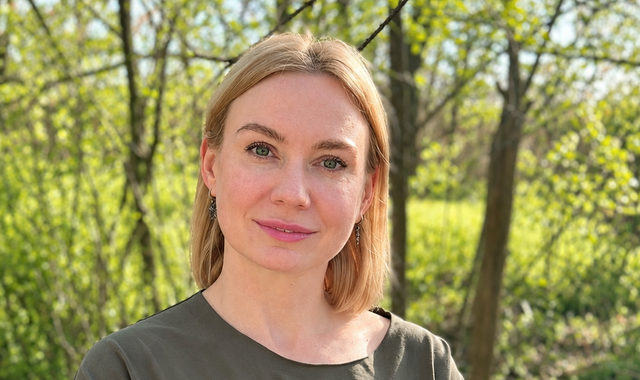
"Often they feel superfluous, as if they don't fit in," says psychologist Yevheniia Zhuravel.
"They can't imagine how to live after what they've been through, or how to live in that civilian world which is so strikingly different from combat."
Follow live updates: Major Kyiv bridge attacked as German leader visits
When Ukraine's veterans come to see her, they have often returned home from fighting on the frontlines or Russian captivity, struggling with deep and complex trauma.
For Yevheniia, her fight is bringing their hearts and minds home to their families too.
While exact figures are generally not confirmed by Kyiv, it's thought that at least tens of thousands of soldiers have been wounded since February 2022 - in addition to those killed.
And the war is still ongoing. Ukraine's veteran population is believed to have already exceeded two million people and will continue to grow before the conflict's end. They will bear the scars, both physical and mental, of their service for the rest of their lives.
While the state does fund mental health support for veterans, much of the support out there is provided by NGOs.
Yevheniia is the lead psychologist at HART, a veteran and civilian rehabilitation space in Kryvyi Rih (the city best known as the birthplace of Volodymyr Zelenskyy).
Those coming to see her, generally veterans and serving military personnel, "almost never" just have one problem, she says.
"It's essentially these consequences of the experience that brought them here. This often shows up as anxiety, emotions that are hard to regulate and difficult to cope with. There can be sleep disturbances, difficulties with trust, wariness, heightened vigilance that appears."
In a broader sense, she says, there are questions about how to integrate back into civilian life.
"Coping with it alone is difficult, so we manage it together."
'That moment completely changed my life'
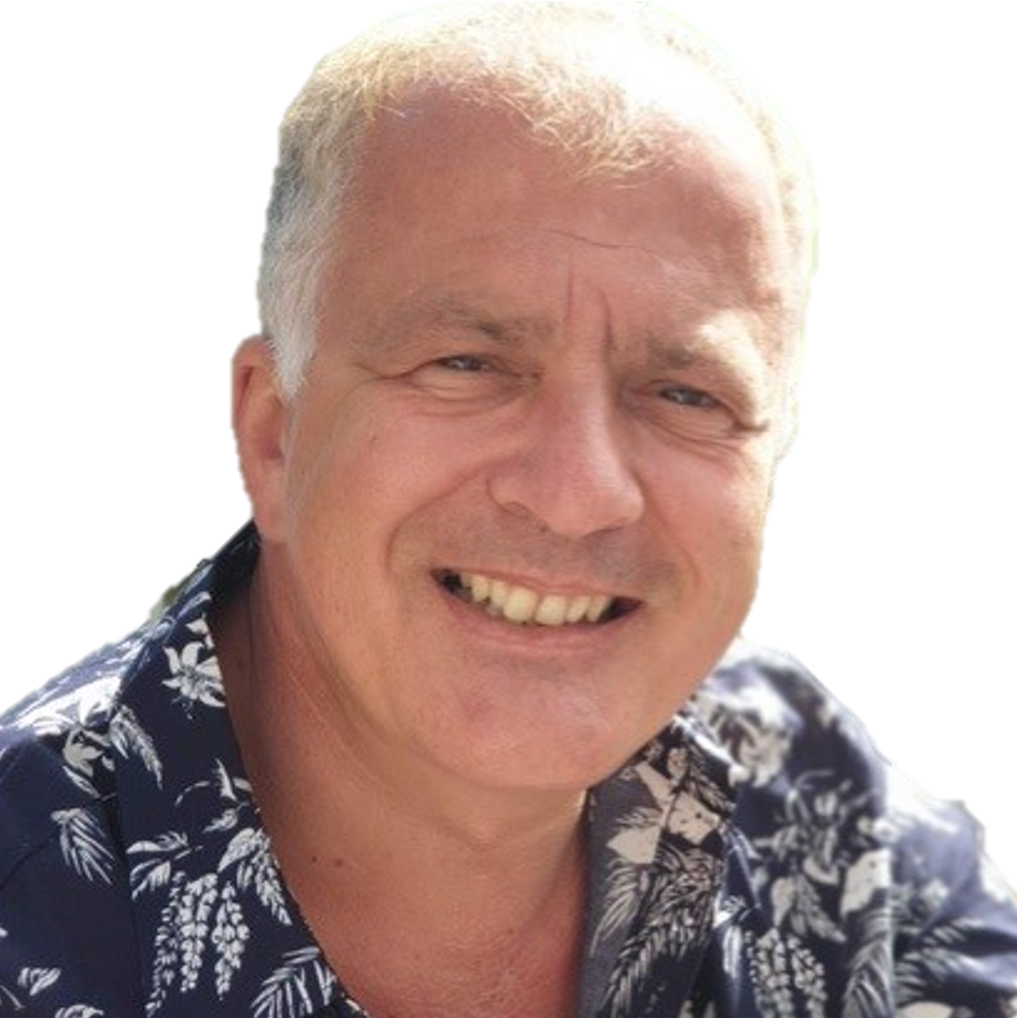
When the full-scale invasion began, Vitaliy was working as a crane operator. He volunteered for the army without hesitation.
He saw active service in a combat brigade but was moved to an engineering regiment after he was wounded.
In June 2023, he finally got his first official leave from the army and went home.
"My wife and children were in Poland. They found a way to travel home so we could all be together."
But on their way to see him for the first time in months, they were involved in a road accident.
"My children were seriously injured, and my wife was killed."
Left alone to raise his two daughters, Vitaliy was demobilised from the army.
He says his mental health was already shaken from what he had seen at the front, and it had been the thought of being reunited with his family that had kept him sane.
"But that day - that was the turning point. That's the moment that completely changed my life.
"And I probably didn't fall apart entirely only because I had responsibility for my children, and I understood that I was the only parent they had left."
He was left dealing with grief, depression and anger all as he tried to adapt to life as a civilian and look after his children.
Eventually, a friend recommended he get in touch with HART, where he lives in Kryvyi Rih, and he was connected with Yevheniia.
It started with him telling her his story.
"She helped me work out how to rearrange my life, how to see civilian life in a new way, how to see my family situation, and myself, in a new way."
Through various techniques, as well as bonding with other veterans, he was able to make great strides in his mental health.
Now he also supports soldiers returning from the frontlines, people who may be in the same position as he was a few years ago.
'We have to restore our strength'
"Often there's still this stigma that a strong person doesn't need help," Yevheniia says.
"It's very important to me to spread and normalise the idea that seeking help isn't just normal, it's actually a recognition of strength."
In her spare time, Yevheniia says it's important for her to stay active and get out in nature, part of a list of things that help her recover after spending her days listening to harrowing stories.
"Because in order to withstand what we're living through, we have to restore our strength, that resource, in order to keep standing."

(c) Sky News 2026: 'We manage together': Meet the psychologist helping Ukraine's veterans live again

 Republic of Ireland's Nations League media call ends in chaos after question by Israeli journalist about flydubai
 Flydubai co-pilot: Australian links probed after 'axe attack' on captain
 Witness sought after death of Yves Sakila - who was pinned down by security guards in Dublin
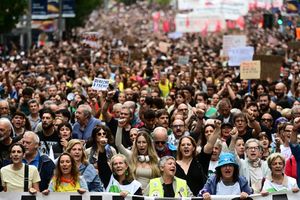 Tens of thousands protest against Spain's housing crisis following eviction of 87-year-old woman
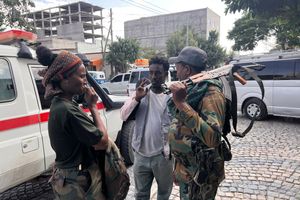 Opposition fighters withdraw from capital of Ethiopia's northern Tigray region