
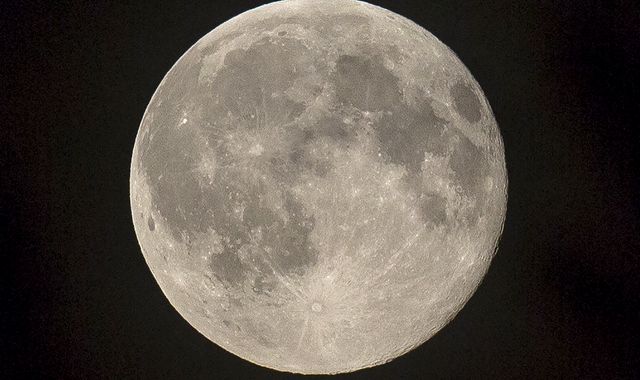
You could catch a glimpse of the so-called Snow Moon tomorrow as it lights the night sky.
The full moon is expected to peak at 10.09pm UK time on Sunday, according to the Royal Observatory Greenwich.
Even if you miss it, the moon tends to appear full for a couple of days before it moves into its next phase, the Waning Gibbous, when the lighted side appears to shrink.
According to NASA, this full moon - the second of the year - got its name from tribes in northeast America, because of the heavy snow the season typically gets.
It has also been referred to as the Storm Moon, also for weather-related reasons, or the Hunger Moon, due to the scarcity of food and hard hunting conditions during the month.
There are 12 or 13 full moons each year, which all have different names typically originating from Native Americans, who branded them based on their way of life.
The lunar cycle was an important method of timekeeping for tribes, the names of which were later adopted by Colonial Americans and eventually made popular in modern culture, according to the Observatory.
Read more:
Astronauts are going back to the moon - here's what you need to know
The vast hi-tech fraud that could cost musicians billions of pounds
You can see the full moon with the naked eye. NASA says, however, that if you look at the full moon with binoculars, it will have more details like craters and large mountain ridges.
Using a telescope will make the moon too big to take in at once, it adds, but you'll see real mountains, valleys, and the cracks in the moon's surface called rilles, formed from lava.

(c) Sky News 2026: When can you spot this year's Snow Moon, and where did it gets its name?
 'Robots listening to robots': How AI music fraudsters are spamming sites and taking cash from real musicians
 Everything to know about Artemis II - the NASA mission to send astronauts around the moon
 Postcode lottery means groundbreaking MND drug is a lifeline for some - but 'mental torture' for others
 Genes play a big part in driving lifespan, scientists find




 On Air