
An amber heat health alert has been issued for parts of England from this afternoon, the UK Health Security Agency has announced.
The alert, which covers London, the South East, the South West, and the East of England, is in place until 8pm on Tuesday.
A separate yellow heat health alert is also in place for the West Midlands and East Midlands, covering the same period.
It comes after the UK Health Security Agency (UKHSA) issued yellow heat health alerts to parts of the UK earlier this week.
Heatwave conditions are being forecast as temperatures rise, with some areas in the UK set to be hotter than Barbados this weekend.
See the weather forecast where you are
An amber heat health alert means there is likely to be increased demand on all health and social care services by vulnerable populations.
It also portends an "increase in risk to health for individuals aged over 65 years or those with pre-existing health conditions".
The UKHSA website highlights another risk: water‑related incidents, including cold‑water shock and drowning.
Explainer: What is cold water shock?
Last month's heatwave saw at least 15 people die in water-related incidents across the UK, including nine children.
Ways to stay safe in the hot weather
Dr Agostinho Sousa, head of extreme events and health protection at UKHSA, said: "Sustained periods of warm weather can result in serious health outcomes, especially for older adults, and it is therefore important that everyone takes sensible precautions while enjoying the sun.
"We are urging health and social care services in affected regions to ensure they are prepared, and reminding people to look out for elderly relatives, neighbours, and those with underlying health conditions, making sure they are aware of the forecast and following the necessary advice."
Listing simple steps to stay safe in the hot weather, Dr Sousa advised staying hydrated and avoiding the sun during the hottest part of the day.
The UKHSA advises people to keep their homes cool by closing windows and curtains in rooms facing the sun, and by avoiding direct sunlight, especially between 11am and 3pm, when UV levels are at their highest.
It also urges those venturing outside to cover up with suitable clothing, such as an appropriate hat and sunglasses, and to seek shade and apply sunscreen regularly. It also directs anyone doing a physical activity in the hot weather to plan to do it during cooler parts of the day, such as the morning or evening.
May saw a record-breaking heatwave across the UK, with wall-to-wall sunshine and blue skies, however, the coming heatwave is likely to feel even hotter.
With "humid and muggy" conditions forecast, the Met Office says the south of England could see highs of 32C on Sunday - and even higher temperatures on Monday.
Commenting on the newly issued amber alert, Sky News meteorologist Christopher England said: "It's worth remembering that these are not heat warnings directed at the general public - which the Met Office issues in severe conditions - but are more in the way of advisories for health and social care services, which may be significantly impacted, both through direct health impacts and requirements, and indirectly through issues with power and staff availability."
These alerts warn of potential issues, including internal temperatures in care settings like hospitals and care homes exceeding the recommended threshold for clinical risk assessment.
Further potential issues include the heat affecting the ability of the workforce to deliver services; and increased demand for power exceeding capacity.
Humidity 'quite a bit higher' than last heatwave
Met Office meteorologist Honor Criswick described how this week's heatwave will differ from last month's.
She said: "It's a bit different to the last heatwave, because last time the humidity wasn't as high, whereas this time the humidity is quite a bit higher.
"It's just going to make it feel that bit muggier and that bit more humid during the day and overnight as well, so it just means it's going to be more uncomfortable, the heat itself."
She added: "Because the humidity is so high, there's a chance that this could potentially spark off some thunderstorms.
"It's always tricky with thunderstorms, because they could pop up pretty much anywhere, particularly across central, southern, south-east parts of England.
"But wherever they do hit, it's probably going to be quite an intense, heavy downpour for a time with some rumbles of thunder, some sparks of lightning, but exactly where they'll be is a tricky one to forecast at the moment."
The AA has advised drivers to check tyres, oil and coolant levels, pack water for passengers and pets, and avoid driving during the hottest part of the day - especially if using an older car.
What is the heatwave criteria?
For a heatwave to be declared, temperatures must exceed a daily maximum for three days in a row.
That max temperature varies from area to area:
• For Scotland, Northern Ireland, much of western Wales and northern England, and Cornwall and Devon, temperatures must exceed 25C;
• In areas like Hull, Cardiff and Bournemouth, that threshold is 26C;
• Some of the Home Counties and part of the Midlands declare a heatwave when it's 27C;
• And London, Surrey, Cambridge and Oxford have the highest thresholds at 28C.

(c) Sky News 2026: Amber heat health alert issued for parts of England as new heatwave looms

 Attempted murder probe after boy, 3, 'ended up in crocodile enclosure' in Cambridgeshire
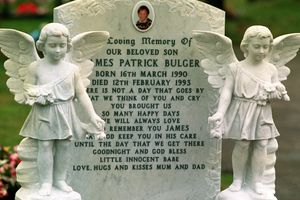 Man, 78, detained under mental health act after vandalism of James Bulger's grave
 Prisoners guilty of murder after child killer found 'tucked up in bed' with 25 stab wounds
 World-famous Robin Hood oak tree has died
 Children vaccinated for HPV have close to zero risk of dying from cervical cancer before age 30, study suggests







 On Air