
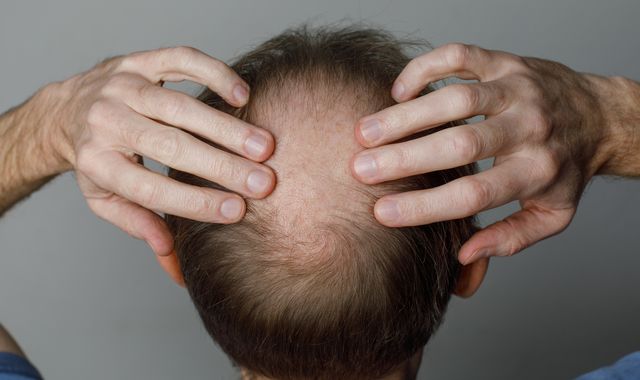
Weight loss drugs such as Mounjaro, Ozempic and Wegovy are linked to an increased risk of hair loss, according to researchers.
People on GLP-1 agonist drugs – which help regulate blood sugar and reduce appetite by mimicking a natural hormone – have been reporting hair loss to regulators, with a new study on around 50,000 people appearing to support that link.
Experts used data from the University of Pennsylvania Health System to compare rates of alopecia hair loss in adults using GLP-1s to manage diabetes with those on other drugs.
The team from the University of Pennsylvania noted that regulators in the US have been informed of the link between the drugs and hair loss, particularly for semaglutide (Wegovy and Ozempic) and tirzepatide (Mounjaro).
So far in 2026, the UK Medicines and Healthcare Products Regulatory Agency (MHRA) has received close to 400 reports of hair loss relating to tirzepatide, alongside 541 last year.
It has also received 148 reports of hair loss linked to semaglutide, alongside 164 reports last year.
For the new study, the team looked at people with type 2 diabetes on GLP-1 receptor agonists or other types of diabetes drugs known as SGLT-2 inhibitors or DPP-4 inhibitors.
In total, 12,004 patients using GLP-1s were compared with 15,221 using SGLT-2 inhibitors, and a further 11,964 GLP-1 users were compared with 11,233 DPP-4 inhibitor users.
After adjusting for factors that could influence the results – such as age and weight – researchers found using GLP-1 drugs was associated with a 37% higher risk of alopecia than the use of SGLT-2 inhibitors.
GLP-1s were also linked to a 68% higher risk of hair loss than use of DPP-4 inhibitors.
'Significant psychosocial consequences'
Writing in the British Medical Journal (BMJ), the researchers said: "Case reports and analyses of the US Food and Drug Administration (FDA)'s Adverse Event Reporting System have described occurrences of hair loss following initiation of a GLP-1 receptor agonist, particularly semaglutide (Wegovy and Ozempic) and tirzepatide (Mounjaro).
"In response, the FDA has indicated that it is evaluating this potential safety signal.
"Although hair loss does not typically result in physical harm, it may have significant psychosocial consequences, affecting self-esteem, quality of life, and adherence to treatment."
Read more from Sky News:
The illegal dumps posing 'serious health risk'
Wales 'crisis' over wildfires
The team said that of the reasons why people might suffer hair loss while on the drugs, the "most likely mechanism" relates to weight loss and "reduced caloric intake", although they added that more research is needed.
The researchers said that restricting calories may "contribute to physiological stress and micronutrient deficiencies (for example, iron, zinc, biotin), which can disrupt the hair growth cycle".
Other factors may include the "metabolic, hormonal, and immunological effects attributed to GLP-1 receptor agonists that may influence hair follicle growth and cycling".

(c) Sky News 2026: Weight loss drugs linked to increased risk of hair loss, researchers say

 Teenage girl and woman in her 40s dead after getting into difficulty off Essex coast
 UK considered suspending trade agreement with Israel over Gaza and West Bank actions
 Ann Widdecombe to be honoured with private service ahead of public memorial
 Wales 'crisis' over wildfires amid concern about lack of helicopters
 Revealed: The toxic chemicals detected at illegal waste sites






 On Air