

Sussex Police and Crime Commissioner Katy Bourne has raised concerns over government proposals to create regional “super-forces.”
She says while shared technology and procurement can offer clear benefits, merging forces risks creating bodies that are too large, too complex and less connected to local communities.
Bourne also warns against a return to target-driven policing, recalling problems from the Blair and Brown years.
Sussex Police and Crime Commissioner Katy Bourne OBE responds to force merger plans announced this week:
"The existing constabulary model of British policing is envied and admired the world over. It is inarguable that policing needs modernising to face organised, cross border crime and terror threats but bigger does not necessarily always result in better. Look at Police Scotland or even the Metropolitan Police which is currently facing calls to be broken up because it is failing to tackle crimes that matter to Londoners.
"The simple truth is that some organisations simply become too big to manage, too important to fail and too cumbersome and dispersed to be held truly accountable or relatable.
"We can all agree on the obvious advantages of scale in procurement and common technology, equipment and processes and there are, in fact, already national organisations and commercial bodies (Bluelight Commercial and the Police Digital Service) successfully supporting policing.
"But, with the proposal for regional super-forces, it seems as if the Home Secretary - like many Ministers in a new Government – has pulled the levers of power in Westminster only to find the connections to Whitehall and beyond have gone slack or snapped entirely.
"I understand why Ministers are tempted to set targets if they want to drive better performance in public services. However, we should not forget that when this centralist control was enacted under the Blair and Brown administrations, the impact on policing created a performance culture chasing arbitrary targets rather than chasing criminals. It also resulted in perverse behaviour and we soon saw calls from senior officers to scrap it.
"Intelligence-led policing in the 90s and 2000s led to a reactive, firefighting police response and an erosion of neighbourhood policing with the subsequent collapse in public confidence.
"The move by a Conservative government to give local people a greater say in the policing services they received through locally elected representatives was a step towards restoring confidence. It has led to a restoration of neighbourhood policing, greater transparency on policing decisions and regular, robust scrutiny of Chief Constables resulting in several IOPC investigations for misconduct.
"What has failed and remains dysfunctional is the national funding formula for police which has, for years, become increasingly dependent on local taxpayers to contribute more – in some areas more than 60% of the overall budget. At least where the police precept is set by locally elected PCCs it is clear to residents where their extra monthly payments are going. If we move to larger, regional police forces there will need to be changes to how police areas are funded by government, especially if the Home Secretary expects a greater role in governance.
"Whilst the public obviously do care about serious organised crime and threats to our national security, they also want to feel safe in their homes and in their neighbourhoods.
"Every public survey I have carried out shows that trust in policing begins with feeling that your police force is drawn from the community it serves so that the public are the police and the police are the public. Breaking that local relationship risks undoing the trust and confidence that county constabularies have developed with residents and businesses.
"A power grab back to the centre with a National Police Service in all but name risks putting bureaucratic expediency above public service. If a smaller coterie of more powerful Chief Officers is not held to account by directly-elected representatives, we will see Police Chiefs marking their own homework and the public’s priorities (like more bobbies on the beat tackling shoplifting, antisocial behaviour and speeding through villages) will be secondary to nationally set and regionally-managed policing plans.
"The fact that the planning for these force mergers has been conducted out of public sight and without input or challenge from those currently responsible for police governance, shows that Ministers and Chief Constables are nervous about how these massive changes will land with the public.
"I’m all for moving fast and breaking things up if the end goal is desirable and achievable but, merging police forces and reforming local authorities at the same time, may be attempting too much too quickly. Reform in haste, repent at leisure.
"We might think it’s perfectly safe for Governments to redesign law enforcement and wield greater power over police chiefs. That’s fine when you have reasonable politicians who respect democracy and the rule of law. But, a National Police Service in the hands of extremists and populists has a worrying historical echo to it."
 V2 Radio listeners help save Christmas for children across the South
 Clean-up team expanding as they battle more container debris in West Sussex
 Residents’ wellbeing boosted by West Sussex libraries
 People across the South urged to protect themselves against flu ahead of festive season
 Man charged in connection with Extreme Right Wing Terrorism in Sussex
 Latest from Homes England on 3,000 housing development West of Ifield
 IGNITE students celebrate their success at Crawley Fire Station
 Worthing Pier to get permanent fix in 2026
 West Sussex County Council’s upgrade of traffic signals to LED will save over £500k
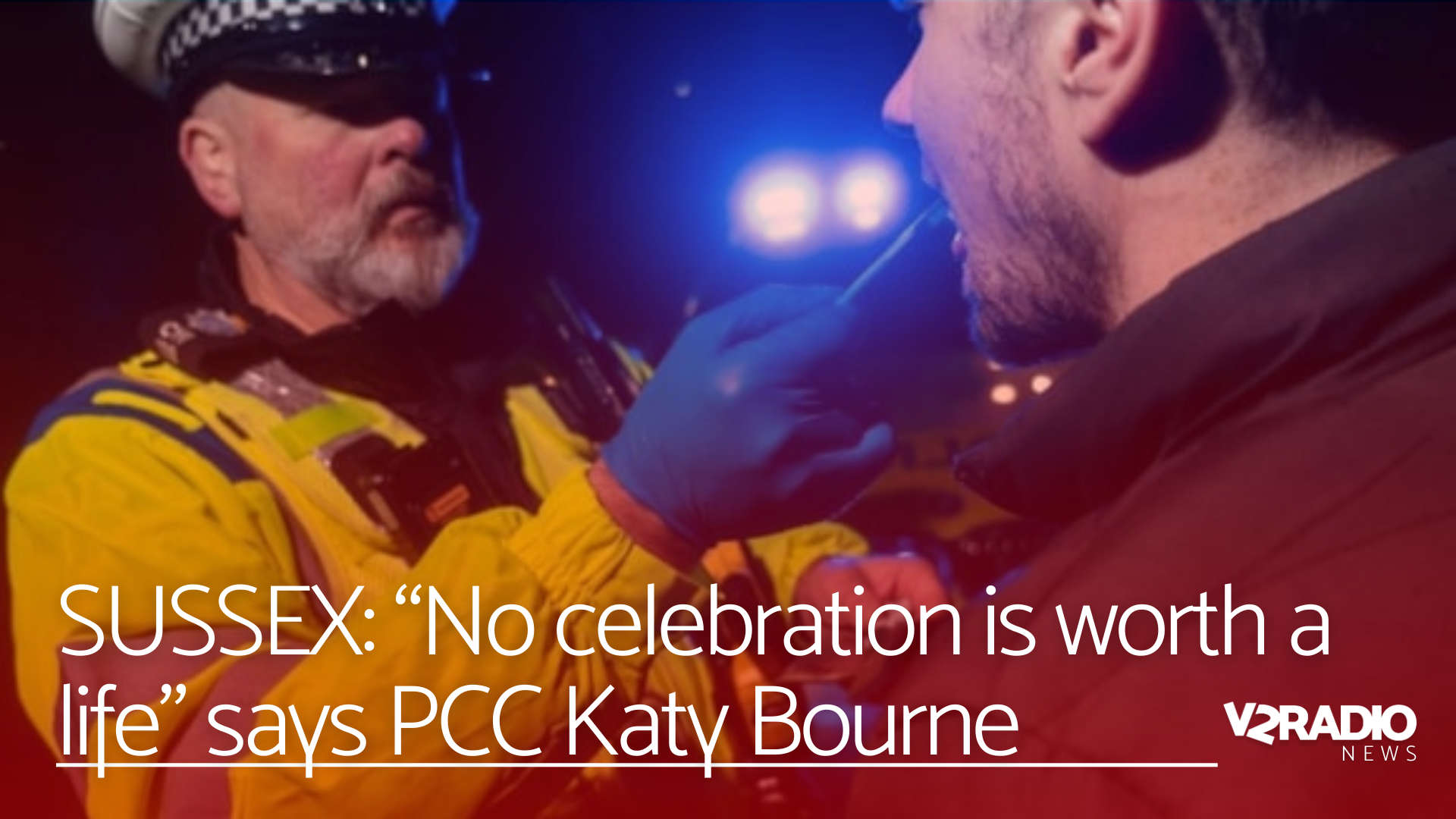 WATCH: "No Celebration is Worth a Life" - PCC Katy Bourne supports Operation Limit







 On Air