
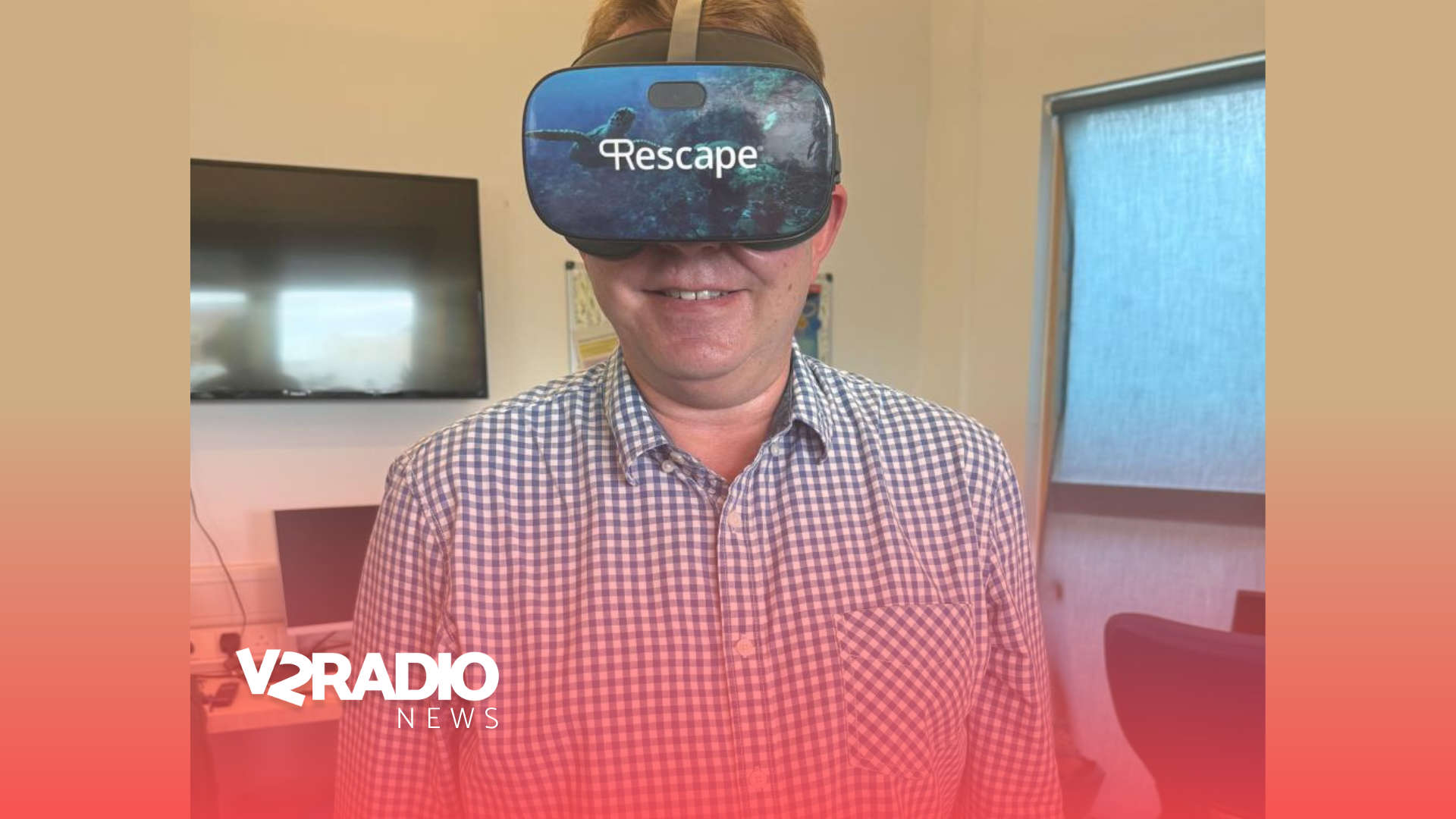
Researchers at University Hospitals Sussex have helped demonstrate how virtual reality could support people living with advanced cancer, after a study found patients reported lower pain levels and improved wellbeing while using immersive digital experiences.
Researchers at University Hospitals Sussex NHS Foundation Trust have helped demonstrate how virtual reality could become a new tool for supporting people living with advanced cancer.
A study involving patients using virtual reality headsets in hospitals and hospices found median pain scores fell from four to two while participants were using the technology.
All 37 people who took part said they would like to use VR again.
The research is exploring whether immersive digital experiences could be used alongside existing palliative care treatments to help manage pain, reduce anxiety and improve quality of life.
The trial was led by University College London and supported by the National Institute for Health and Care Research.
University Hospitals Sussex was among the organisations involved, bringing together hospitals, hospices, patients and researchers from across the UK.
Patients taking part could use VR headsets to enter a range of digital environments, including beaches, cities, walking routes and underwater scenes.
Interactive games were also available.
Researchers say the aim is to provide an immersive experience which helps patients shift their attention away from pain, anxiety and the clinical environment around them.
For people living with advanced cancer, persistent pain can have a major impact on everyday life, affecting sleep, mobility, appetite and emotional wellbeing.
Patients may also experience anxiety, exhaustion, depression and isolation.
The researchers are investigating whether VR could help manage some of those symptoms without replacing conventional medical treatment.
Cancer Research UK estimates that more than 403,000 people are diagnosed with cancer in the UK each year.
As survival rates improve, increasing numbers of people are living for longer with advanced cancer and may require ongoing treatment, symptom management and palliative care.
More than half of people with advanced cancer are estimated to experience moderate or severe pain.
Pain-relieving medicines, including opioids, remain an important part of cancer treatment, but researchers are increasingly investigating additional approaches which could be used alongside medication.
During the study, 37 people living with advanced cancer were asked to use VR headsets and provide feedback about their experiences.
The median pain score reported by participants fell from four before using the technology to two while they were immersed in VR.
Researchers said some patients became so absorbed in the virtual environment that they temporarily stopped focusing on their pain.
One participant said: “I felt I can be completely lost and completely occupied with it… or completely forgot my problems”.
Other participants described the experiences as relaxing and emotionally uplifting, while some said VR helped relieve boredom and anxiety.
Virtual environments also reminded some patients of holidays, significant places and positive memories.
Researchers said the potential benefits could extend beyond pain management, with participants reporting improvements in relaxation, sleep, gentle movement and social connection.
The project has also contributed to the development of practical guidance for hospitals and hospices considering using VR as part of cancer and palliative care.
The guidance is based on interviews with patients and healthcare staff, as well as an eight-week implementation phase in hospital and hospice settings.
It covers how clinical teams can safely introduce VR, personalise experiences for individual patients and make sure appropriate clinical and emotional support remains available.
Researchers stress that further studies will be needed to establish how effective VR could be for different patients and how it might best be incorporated into routine care.
Professor Ollie Minton, Consultant in End of Life Care and Palliative Medicine at UHSussex and co-lead of the study said: “Now we have the beginnings of an evidence base that we can build on. It is great that we can guide NHS teams to use VR successfully for pain, rather than it being purchased and left on the shelf. The project provides a strong foundation for future research into how VR could support patients living with advanced cancer.”
Get the latest ALERTS for BREAKING NEWS in the SOUTH on your phone by downloading the V2 RADIO APP today!
V2VOUCHERS.CO.UK is offering half-price deals on a wide range of experiences across the South, from meals out at local restaurants to tickets for some of the region’s biggest events.

 Worthing man arrested over alleged inappropriate behaviour on seafront
 Housing costs and lack of career opportunities threaten young people’s future in Adur, Arun and Worthing
 Chichester MP calls for action as fewer than 6% of Sussex burglaries result in charge or summons
 St Leonards woman acquitted of drug dealing offences
 Original props from new D-Day film Pressure go on display in Portsmouth
 Sussex reptile rescue launches urgent appeal for permanent home
 Newport heritage attractions to open free as part of Heritage Open Days
 Horsham families offered support as back-to-school costs reach hundreds of pounds
 Memorials policy revised in Brighton and Hove
 Abuser jailed after assaulting woman in West Sussex







 On Air