
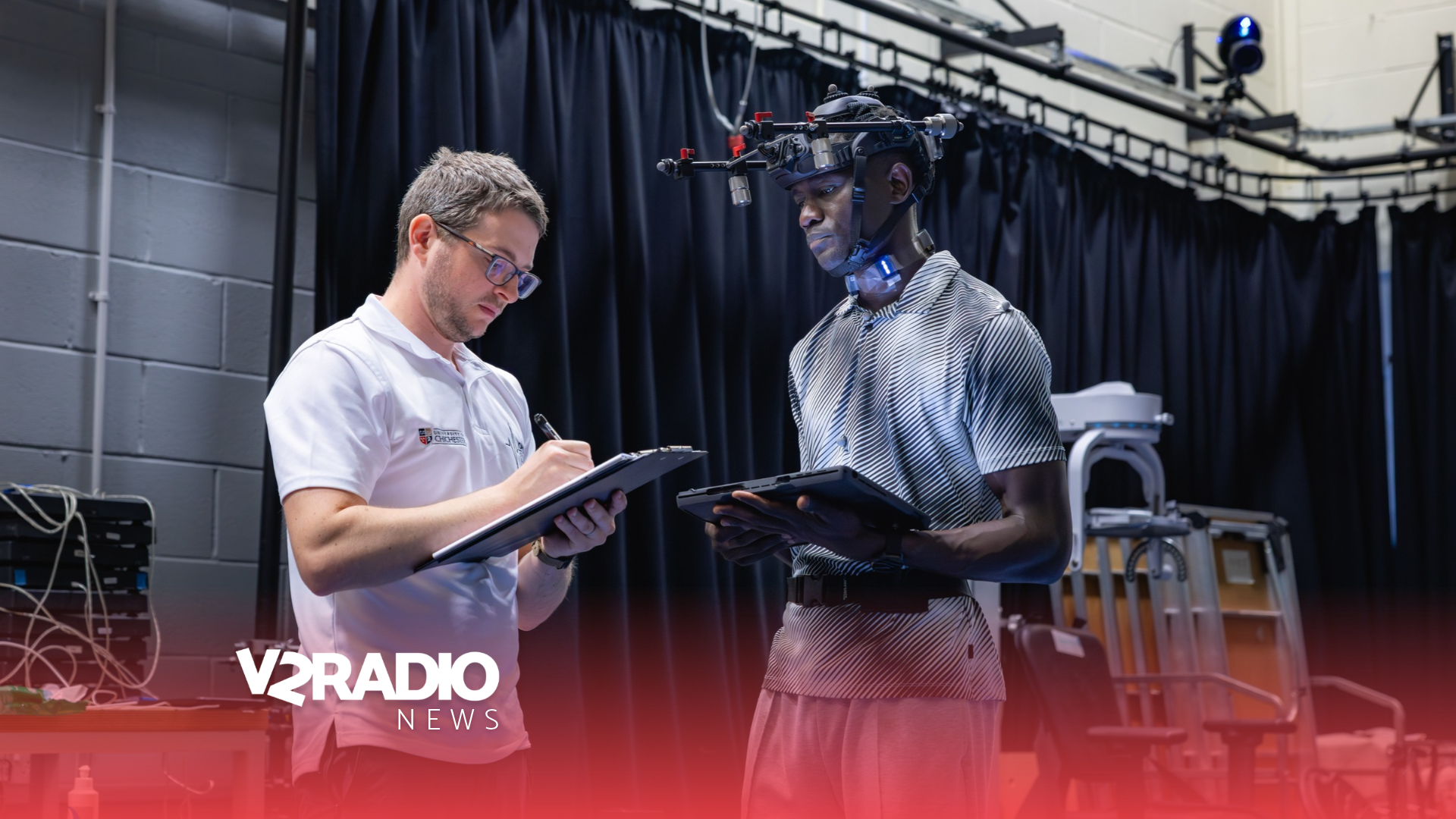
Researchers at the University of Chichester are helping to shape the future of British military equipment through a major defence trial investigating how increasingly sophisticated technology affects soldiers' physical and mental performance.
The university is working alongside the Defence Science and Technology Laboratory (Dstl) and defence technology company QinetiQ on a project designed to improve battlefield effectiveness while reducing the risk of long-term injuries.
The research, known as the HEADS UP trial, focuses on the growing amount of equipment worn on soldiers' heads, including night vision goggles and emerging virtual and augmented reality systems.
While these technologies can provide important advantages during military operations, scientists are concerned that the additional weight could increase fatigue, strain neck muscles and affect soldiers' ability to concentrate and react quickly.
The research is being carried out at the University of Chichester, where serving British Army personnel are taking part in specially designed tests.
Soldiers from the Queen's Royal Hussars, Princess of Wales's Royal Regiment, Royal Dragoon Guards and Royal Engineers are among those participating.
During the trials, participants wear a specially designed rig that simulates different equipment weights and configurations while completing tasks representative of military operations.
Researchers monitor how the additional weight affects movement, physical exertion, muscle activity, concentration and decision-making.
Advanced technology, including motion capture equipment and eye-tracking systems, is being used to gather detailed information about how soldiers respond to different conditions.
Scientists are also examining energy expenditure and the physical demands placed on the body.
Professor Sam Blacker, research lead at the University of Chichester, said the project builds on the institution's expertise in improving performance and preventing injuries in physically demanding professions.
"The Occupational Performance Research Group at the University of Chichester specialises in improving health and performance in physically demanding occupations, particularly the military. Our work ranges from collecting data in the field and running studies in our sport and exercise science laboratories.
"For this particular project we have brought together a multidisciplinary team of researchers from the University of Chichester and QinetiQ to investigate the effects of carrying additional load mass on the physical and cognitive aspects of soldier performance."
The Defence Science and Technology Laboratory says modern soldiers are required to carry more sophisticated equipment than ever before, helping them communicate, identify threats and operate in demanding environments.
However, carrying heavier equipment on the head can increase physical strain and place greater demands on concentration, potentially affecting performance during military operations.
Matt, the Dstl lead from the Human Augmentation project, explained that the research is intended to ensure future equipment is designed around the needs of soldiers.
"The trial puts the soldier at the centre of new equipment design. By reducing the negative effect of equipment, such as fatigue, we can improve performance and effectiveness. This will improve the soldier’s lethality, agility, and resilience.
"A comprehensive range of physiological, biomechanical, and cognitive measures are being collected, including movement speed, muscle activity, motion capture, metabolic cost, cognitive performance, and eye-tracking. Together, these assessments provide an interdisciplinary understanding of how head-mounted equipment influences soldier performance."
The findings are expected to help the Ministry of Defence make informed decisions about the design and introduction of future military technologies.
By understanding how different types of equipment affect soldiers, researchers hope to reduce unnecessary physical strain, improve comfort and maintain effectiveness during demanding operations.
The project also highlights the role being played by the University of Chichester in national defence research, bringing together expertise in sport and exercise science, human performance and military technology.
The Ministry of Defence says the results will support the future development and adoption of equipment designed with the physical and cognitive needs of military personnel at its centre.
BREAKING NEWS ACROSS THE SOUTH
Don't miss the stories that matter to you! Get BREAKING NEWS ALERTS sent STRAIGHT TO YOUR PHONE. Download the FREE V2 RADIO APP today! Seen something? Know something? Got a story we should be covering? BE OUR EYES AND EARS. Email news tips, images and video to news@v2radio.co.uk
HALF PRICE. BIG SAVINGS. DON'T MISS OUT!
STOP PAYING FULL PRICE! Get 50% OFF restaurants, days out, attractions and unforgettable experiences across the SOUTH. GRAB YOUR DEALS NOW at WWW.V2VOUCHERS.CO.UK

 Storm Austin: Live Blog - Updated: 10:55 23.10.2026
 Huge fire at Lancing Business Park involved two industrial buildings as 50 emergency calls made
 Storm Austen: LIVE Webcams across the South
 Bognor Regis restaurant shortlisted for national kebab award just eight months after reopening
 Storm Austen: Littlehampton set for spectacular bonfire and fireworks display this Saturday despite Storm Austen concerns
 Eastbourne named among UK's top 20 nightlife destinations in new national study
 Portsmouth man charged with six offences following series of burglaries and attempted break-ins
 Portsmouth misses out on UK City of Culture 2029 shortlist as organisers say they are devastated
 Storm Austen: Latest as powerful storm approaches Sussex, Hampshire and the Isle of Wight with 70mph winds possible
 Electric diggers and trucks tested on Eastbourne beach in major step towards greener coastal defences